
Opening branch overview
Building the branch home surface
Loading branch highlights, featured unit context, and gallery moments.
Overview
Members
Units
Building the branch home surface
Loading branch highlights, featured unit context, and gallery moments.
Building the branch units surface
Loading unit filters, rankings, and the branch unit grid.

38 members•1 unit
Relive and share the memories of your service-time with your brothers and sisters in arms today. VetFriends.com can help you reconnect.
Did you proudly serve in the HQ Det USA Pusan Base Command APO 96259?
Are you looking for someone who is or was in the HQ Det USA Pusan Base Command APO 96259?
Do you have HQ Det USA Pusan Base Command APO 96259 photos you'd like to share?
Then join a community with your brothers and sisters of the HQ Det USA Pusan Base Command APO 96259.
Branch
U.S. Army
Members
38
HQ Det USA Pusan Base Command, APO 96259, was a key United States Army installation located in Pusan (Busan), South Korea, primarily active during and after the Korean War. Established in the early 1950s, the headquarters detachment played a critical role in managing logistics, supply chains, and administrative functions for U.S. forces in the southern region of the Korean Peninsula. As the primary hub for receiving personnel and materiel, Pusan Base Command supported United Nations operations and reconstruction efforts following the armistice. Over the years, as the U.S. military presence in Korea was consolidated and streamlined, the command’s responsibilities were gradually absorbed into larger regional commands, ultimately leading to its deactivation.
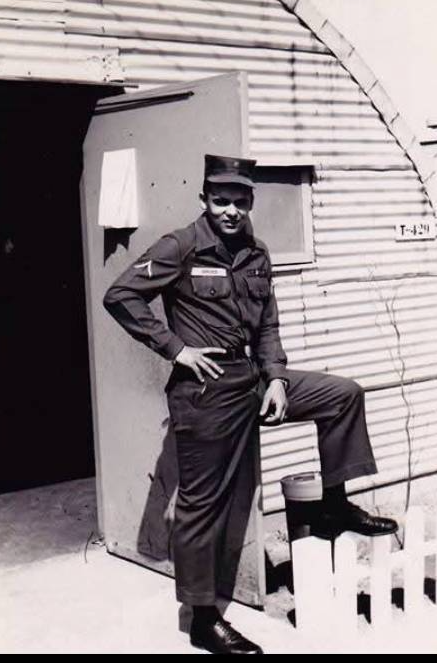
4th Missile Command South Korea • U.S. Army • 1961

1/56 ADA • U.S. Army • 1996

Artillery • U.S. Army

Btrp 7/17th 6th ACCB • U.S. Army • 1973